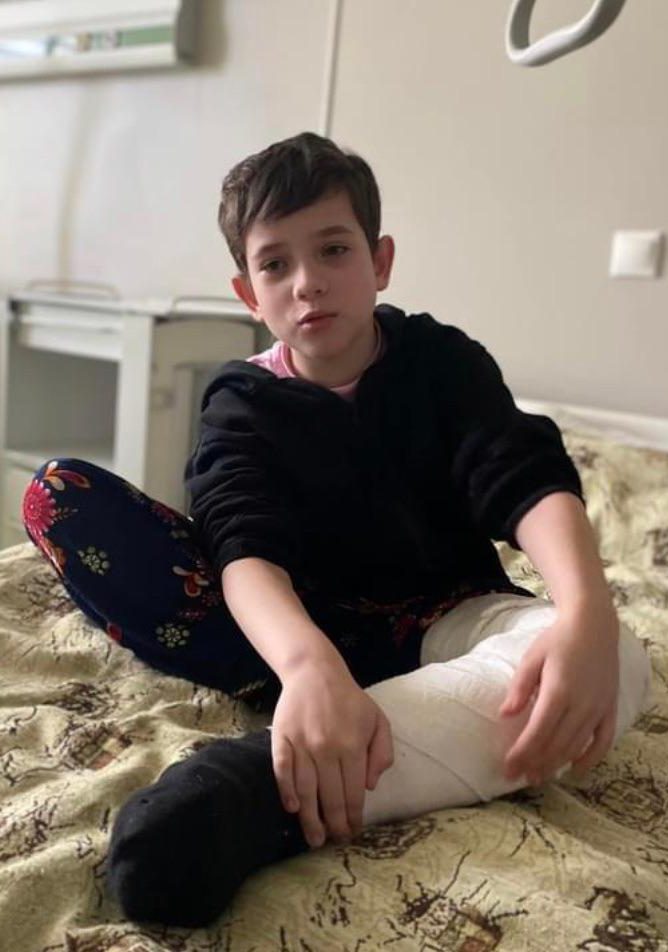
Illia was nine years old when Russia’s full-scale invasion reached his hometown of Mariupol in 2022. As shelling intensified, he and his mother sheltered in a basement. During an attempt to reach safety, shrapnel killed his mother and badly wounded Illia’s leg. Neighbors buried his mother, and Russian forces transferred the injured boy into Russian-occupied Donetsk.
In Donetsk, doctors operated on Illia’s leg under grim conditions that he later described as without anesthesia, and occupation officials tried to use the orphaned child in propaganda narratives. Ukrainian outlets and the state “Ukraine.ua” project both document these experiences.
From there, officials on the Russian side moved to place him for
adoption—part of a broader system that has funneled thousands of Ukrainian children deeper into Russia or Russian-controlled territory. Illia’s grandmother, Olena Matvienko, began a determined, months-long effort to find him and bring him home. She eventually succeeded, retrieving Illia from occupied Donetsk and returning him to Ukraine.
Back in Ukraine, Illia received treatment at Kyiv’s Okhmatdyt children’s hospital, where President Volodymyr Zelensky met him and highlighted his case as emblematic of Russia’s abductions of Ukrainian children. Illia later spoke publicly alongside other young survivors about what happened to them.
Illia and his grandmother settled in western Ukraine; local media
covered their return and the community support they received, including housing assistance as he continued surgeries to remove shrapnel from his leg. His case is frequently cited by Ukrainian and international groups tracking the unlawful deportation of children.
Illia Matviienko
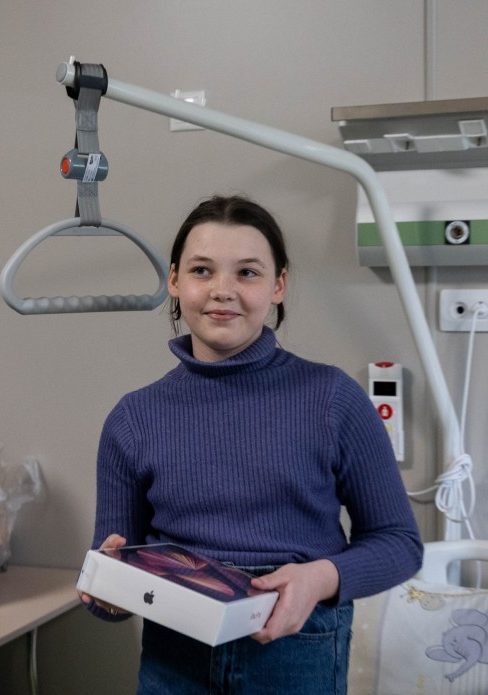
Kira was eleven years old when the full-scale Russian invasion reached her home city of Mariupol. She had already lost her mother at a young age and lived with her father, Yevhen Obedinsky, a well-known Ukrainian athlete and former captain of the national water polo team. When Russian troops began their relentless assault on Mariupol in early 2022, Kira and her father took shelter as bombs fell across the city. On March 17, 2022, her father was killed in front of her by an explosion during the fighting.
Alone and terrified, Kira joined a group of civilians trying to escape the ruined city. During the attempt, she was wounded by shrapnel and captured by Russian or Russia-controlled forces. They transferred her to a hospital in the occupied Donetsk region, where she was treated under poor conditions. Occupation officials told her she would be sent to an orphanage if no relative came for her — a threat that reflected the wider pattern of Ukrainian children being removed from their families and placed under Russian “care.”
Back in Ukraine, Kira’s grandfather learned that she was alive and began searching for her. After weeks of negotiations and coordination with humanitarian organizations, he managed to bring her back to Ukrainian-controlled territory. Kira was reunited with her family and began receiving medical and psychological care in Kyiv, where doctors helped her recover from her injuries.
Today, Kira lives with her grandfather and continues her recovery — carrying the memories of her father, her city, and the violence that changed her life. Her courage, and the persistence of her family, have made her a symbol of Ukraine’s struggle to protect its children and bring them home.
Kira Obedinska
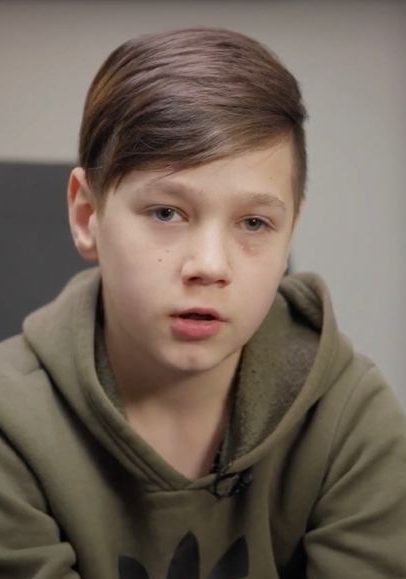
Oleksandr, known as Sashko, was only 12 years old when the war broke into his life. In March 2022, as Russian forces advanced on Mariupol, he and his mother, Snizhana, were captured by occupying troops. The two were taken to a so-called filtration camp, where they were separated and forced apart — Oleksandr had no chance to say goodbye to his mother.
At the camp he suffered an eye injury and was subsequently sent to a hospital. Then, according to the Ukrainian “Children of War” archive, he was told he would be placed in an orphanage — and potentially adopted into a Russian foster family. Throughout this ordeal, Oleksandr—the boy known by the nickname “Sashko”—held onto the hope that someone would come for him. His grandmother’s phone number became his lifeline. He managed to call her and thereby avoid being formally adopted.
While the official Ukrainian-government site does not list the final outcome for him publicly, his case is cited among numerous documented instances of children from occupied Ukrainian territories being separated from their families, undergoing filtration, and facing forced transfers or adoption.